Using Thermal Mass in Passive Solar
Thermal mass is everything inside a home that absorbs, retains and later emits heat, effectively providing free heating. Like most things in home construction, there are many different approaches to its use.
Thermal mass is everything inside a home that absorbs, retains and later emits heat, effectively providing free heating. Like most things in home construction, there are many different approaches to its use.
At first glance, you might think that it's impossible to have too much or too little thermal mass. After all, if there's loads of it, your home will store more heat; if there's very little, you'll still get the benefits of what you do have.
But it's not as simple as that.
When you first set foot in the renewable energy arena, it can look daunting: different technologies, different approaches, net-zero, net-positive, PV arrays, solar thermal, geothermal, wind power... it's a big subject and can be confusing. So where should you start?
There are some things you can do to save energy and money before you install even the simplest renewable energy system. The three simple steps are to reduce losses, increase efficiency and reduce consumption.
Would it surprise you to know that the price you pay for fossil fuels could be as little as 20% of their real cost? That's because they're often subsidised by the government. Cynics would say that this is to keep prices low and ensure that business keeps booming for the people who control the resources and, in many ways, history shows they're right.
Many people who consider installing renewable energy systems in their homes are put off by the relatively high investment. Why would you choose a solar thermal system that could cost thousands of dollars when you can buy an electric water heater for a couple hundred?
One of the most compelling arguments for widespread adoption of renewable energy systems is the frightening idea that the world is going to run out of fossil fuels. While this is not an immediate concern, there is a strong movement to switch entirely to renewable sources by the middle of the century.
The single biggest use of solar thermal systems worldwide is to heat swimming pools. As a result, special technologies have appeared that facilitate this use, the best of which is a web-and-tube setup. The requirements for seasonal pool heating are much simpler than those for a whole-home, all-season solar thermal system: the water only needs to be heated to a little above ambient temperature, the collectors don't need to be climate-proof (as they're only laid out in hot months, when needed) and they don't need any glazing.
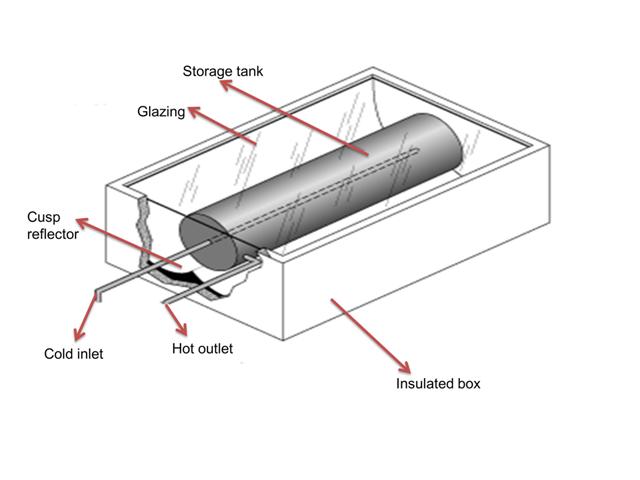
It doesn't matter whether you're installing a huge solar thermal system to heat the water for an entire community or a small residential setup to lower your power bills: you'll need a storage tank to keep hot water in. And since the sun has an annoying tendency to be weaker in winter and disappear at night, that tank needs to be insulated to keep your water hot as long as possible.