Solar
You are here
How to Vent Thermal Trombe Walls
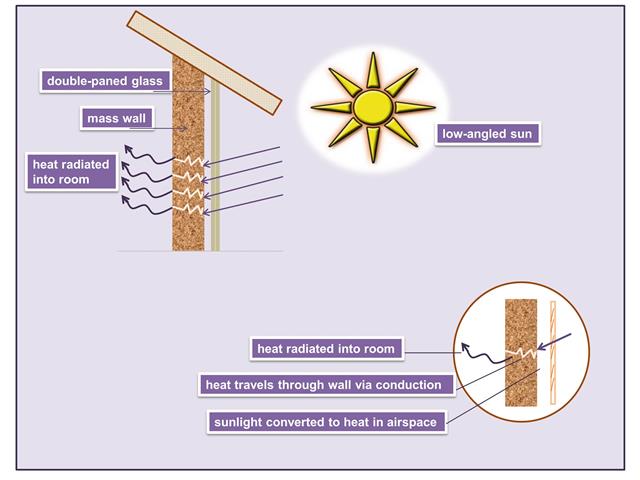
Thermal walls, or Trombe walls, are the single most flexible passive solar option: they work in any climate and on any home, providing extra heat throughout the night after gathering heat during the day.
How to Use Thermal Trombe Walls Properly
As with all passive solar design options, Trombe walls are a great addition to your home design: they retain a lot of heat, helping to reduce your nighttime heating costs throughout the cool period of the year. However, again like all other options, they need to be used correctly or they won't do you any good.
How to Choose the Right Thermal Wall Design
Although thermal Trombe walls work well in all climates and for almost any home, you need to choose the correct design for your particular needs. This choice depends on your local climate. Here are some essential guidelines:
Pros and Cons of Trombe Thermal Walls
The single most widely applicable passive solar design option is thermal or Trombe walls. The option works in every climate and every location, from the hottest and sunniest to the coldest and darkest. But like everything, Trombe walls have their disadvantages as well.
Room Layout for Passive Solar Homes
In an ideal passive solar world, homes would be built as a long string of single rooms, so that every room would be heated by the sun and there would be no need to transport warmth from warmer to cooler rooms. In practical terms, long houses are rarely appropriate: traffic flow inside such buildings is often difficult and housing lots in towns and cities tend to be square or rectangular, rather than extended oblongs.
Counting the Cost of Passive Solar Installations
Most, if not all, proponents of solar energy will exhort the long-term value of installing passive (and active) solar systems. The return on investment over the life of the installation is always impressive on paper and professional installers will happily spend hours explaining how the cost works out as a tiny percentage of your income. Then they'll just as happily bill you five figures!
Basic Physics for Newbie Solar Designers
Physics is the science that defines how the physical world is structured and how each part of it interacts with all the others. Unfortunately, it's an incredibly complicated science because of this. The world is a very complex machine, after all!
As far as solar designers are concerned, there are some very basic laws of physics that must be understood. If you are a newbie in the solar energy field, here's a brief primer for you.
What is a Sun-Tempered Home?
As you research passive solar home design, you may run into the term "sun-tempered" for homes. A sun-tempered home is a sort of "halfway house" option, rather than the whole-hog option of true passive solar design. Let's look at how the two compare:
How to Choose South-Facing Windows
There are two parts to maximizing solar gain through windows: direct gain and indirect gain. The more obvious and common of the two is direct gain – using the sunlight that comes through the windows and heats the air and thermal mass in the home by falling directly on objects and walls.